| |
| Home > Support > Glossary |
| |
| GLOSSARY OF TERMS |
Enter a word or phrase:
Term: |
A B C D E F G H I J K L M N O P Q R S T U V W X Y Z
|
| |
A
- acoustic measurement
- See acoustic testing
- acoustic measurements
- See acoustic testing
- acoustic standard
- See acoustic standards
- acoustic standards
- Published by ITU-T, ETSI, TIA/EIA/ANSI, 3GPP and various national bodies
- acoustic test
- See acoustic testing
- acoustic test equipment
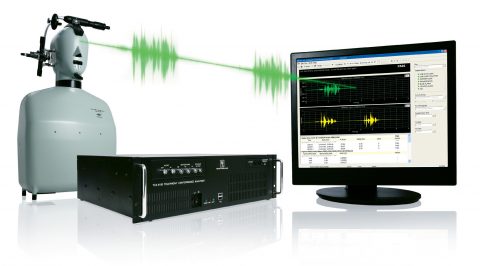
- An equipment that performs acoustic testing of phones and electro-acoustic devices. Includes or interfaces with a speaker (mouth simulator) and microphone (ear simulator), signal generator and analyzer.
- acoustic tester
- See acoustic test equipment
- acoustic testing
- Acoustic testing is performed to assess electro-acoustic performance, speech quality of phones and to verify compatibility with other phones communication networks. Various characteristics of a phone are tested over its electro-acoustic path between the phone’s interface, microphone, speaker and line (wired or wireless).
- acoustics measurements
- See acoustic testing
- ADSL measurement
- See ADSL testing
- ADSL standard
- See ADSL standards
- ADSL standards
- Published by ITU-T, ETSI, TIA/EIA/ANSI and various national bodies such FCC, Industry Canada and ACIF
- ADSL test
- See ADSL testing
- ADSL test equipment
- Usually includes signal generator and (spectrum) analyzer, line simulator and noise generator
- ADSL test set
- See adsl test equipment
- ADSL tester
- See adsl test equipment
- ADSL testing
- Usually includes physical layer compliance measurements (Power Spectrum Density, Return loss, etc), TIM (Transmission and Impairments Measurements), Reach rate testing and Interoperability testing.
- ADSL verification
- See ADSL testing
- ADSL2
- See ADSL …
- analog FXO & FXS
- See analog FXO & FXS interface
- analog FXO & FXS interface
- "Analog Foreign eXchange Subscriber (FXS) and Foreign eXchange Office (FXO) are the names of the two most common interfaces (ports or plugs) found in analog telephony environments. Analog telephony, also known as Plain Old Telephone Service (POTS), is the service the local phone company typically delivers to your home. Local phone companies deliver POTS from their Central Office (CO) to the subscriber’s premises over a circuit consisting of two copper wires. To increase the distance over which the signal can be transmitted the two wires are twisted together, which also reduces electromagnetic interference. So these two-wire copper cables are commonly known as “twisted pairs.” FXS - Foreign eXchange Subscriber interface (the plug on the wall) delivers POTS service from the local phone company’s Central Office (CO) and must be connected to subscriber equipment (telephones, modems, and fax machines). In other words an FXS interface points to the subscriber. An FXS interface provides the following primary services to a subscriber device: - Dial Tone - Battery Current - Ring Voltage You may also see the FXS acronym rendered as Foreign eXchange System. FXO - Foreign eXchange Office interface (the plug on the phone) receives POTS service, typically from a Central Office of the Public Switched Telephone Network (PSTN). In other words an FXO interface points to the Telco office. An FXO interface provides the following primary service to the Telco network device: on-hook/off-hook indication (loop closure) "
- analog FXS & FXO interface
- See analog FXO & FXS interface
- analog FXS & FXO
- See analog FXO & FXS interface
- analog measurement
- See Analog PSTN testing
- Analog PSTN test equipment
- Usually includes a loop simulator VF signal generator and analyzer and/or TIMS (Transmission and Impairment Measurement Set)
- analog PSTN testing
- Usually physical layer testing (e.g. Signal level, Return loss, Balance, DC characteristics, etc) TIMS and functional testing of analog PSTN (POTS) FXS/FXO equipment and networks
- analog standard
- See analog standards
- analog standards
- Published by ITU-T, ETSI, TIA/EIA/ANSI and various national bodies such FCC (e.g. FCC Part 68), Industry Canada (CS03) and ACIF (AS/ACIF S002, S003, S004)
- analog test
- See analog PSTN testing
- analog test equipment
- See Analog PSTN test equipment
- analog testing
- See Analog PSTN testing
- audio analyzer
- Performs measurements such as Level Frequency Response, THD+N, Phase, Crosstalk Signal-to-Noise Ratio on Audio equipment (e.g. MP3 and CD players, receivers, power amplifiers, sound cards, etc)
- audio measurements
- See Audio testing
- audio quality measurement
- See Audio testing
- audio quality measurements
- See Audio testing
- audio quality test
- audio quality testing
- See Audio testing and PEAQ (at Opticom)
- audio test
- See Audio testing
- audio test equipment
- See audio analyzer
- audio test set
- See audio analyzer
- audio tester
- See audio analyzer
- audio testing
- Include Level Frequency Response, THD+N, Phase, Crosstalk Signal-to-Noise Ratio, etc
- audio verification
- audio testing
- Back to top
- B
- C
- cellular measurement
- See mobile…
- cellular measurements
- See mobile…
- cellular phone testing
- See mobile…
- cellular standard
- See mobile…
- cellular standards
- See mobile…
- cellular test
- See mobile…
- cellular test equipment
- See mobile…
- cellular test set
- See mobile…
- cellular tester
- See mobile…
- cellular testing
- See mobile…
- cid standard
- See CID stds
- cid standards
- "CID/SMS over analog PSTN interface standards ETSI EN 300 659-1 V1.3.1, ETSI EN 300 659-2 V1.3.1, ETSI EN 300 659-3 V1.3.1, ETSI ES 201 912 V1.1.1 ETSI 300 648, ETSI EN 300 778-1,2 V1.2.1"
- cid test
- See CID testing
- cid tester
- See CID testing
- cid testing
- Testing of Caller (Caller ID) Identification protocol
- cid verification
- See CID testing
- co testing
- Testing of Central Office equipment such as switches, channel banks, multiplexers
- communication test equipment
- Equipment that tests various characteristics of communication equipment or network including physical/electrical characteristics, power, frequency, spectrum, bandwidth, transmission rate, modulation, BER, protocols
- Back to top
- D
- dsl measurement
- See ADSL/ADSL test/ADSL stds…
- dsl standard
- See ADSL/ADSL test/ADSL stds…
- dsl standards
- See ADSL/ADSL test/ADSL stds…
- dsl test
- See ADSL/ADSL test/ADSL stds…
- dsl test equipment
- See ADSL/ADSL test/ADSL stds…
- dsl test set
- See ADSL/ADSL test/ADSL stds…
- dsl tester
- See ADSL/ADSL test/ADSL stds…
- dsl testing
- See ADSL/ADSL test/ADSL stds…
- DSLAM
- A DSLAM (Digital Subscriber Line Access Multiplexer) is a network device, usually at a telephone company central office, that receives signals from multiple customer Digital Subscriber Line (DSL) connections and puts the signals on a high-speed backbone line using multiplexing techniques. Depending on the product, DSLAM multiplexers connect DSL lines with some combination of asynchronous transfer mode (ATM), frame relay, or Internet Protocol networks. DSLAM enables a phone company to offer business or homes users the fastest phone line technology (DSL) with the fastest backbone network technology (ATM).
- dslam tester
- See ADSL/ADSL test/ADSL stds…
- dslam testing
- See ADSL/ADSL test/ADSL stds…
- Back to top
- E
- E1
- A digital 2.048 Mbps layer 1 interface defined in ITU-T G.703
- e1 analyzer
- Equipment that tests layer 1 transmission and physical characteristics of E1 interface or E1 line
- e1 standards
- Published by ITU-T (G.703, G.704, G.823), ETSI (TBR 12, TBR 13, TBR 4), TIA/EIA/ANSI (464-C) and various national bodies such FCC (FCC Part 68) Industry Canada (CS03) and ACIF (AS/ACIF S016)
- e1 test
- See E1 testing
- e1 test equipment
- See E1 analyzer
- e1 test set
- See E1 analyzer
- e1 tester
- See E1 analyzer
- e1 testing
- Layer 1 (Physical layer) tests. Include Pulse shape, BER, line coding, Jitter, Framing, Return loss, Impedance, PCM analysis and TIM tests
- etsi requirements
- See ETSI standards
- etsi standard
- See ETSI standards
- etsi standards
- Published by (ETSI European Telecommunications Standards Institute). Examples of ETSI standards are: ETSI ES 203 021, TBR 21, TBR 38, TBR 4, TBR 12, TBR 13, TBR 10, ETSI TS 102 027
- etsi test
- See ETSI testing
- etsi testing
- Testing according to the ETSI standards
- Back to top
- F
- fax test
- See Fax testing
- fax test equipment
- See Fax testing
- fax tester
- See Fax testing
- fax testing
- Testing of fax (facsimile) equipment includes fax protocol (T.30, T.38) testing, TIM, interoperability, fax transmission quality testing.
- fax verification
- See Fax testing
- FCC
-
- fcc compliance testing
- See FCC testing
- fcc measurement
- See FCC Compliance testing
- FCC Part 68
- "FCC Part 68 of the FCC (Federal Communications Commission, USA) rules (47 C.F.R. Part 68) governs the direct connection of Terminal Equipment (TE) to the Public Switched Telephone Network (PSTN), and to wireline carrier-owned facilities used to provide private line services. Part 68 also contains rules concerning Hearing Aid Compatibility and Volume Control (HAC/VC) for telephones, dialing frequency for automated dialing machines, source identification for fax transmissions, and technical criteria for inside wiring. Many technical and administrative functions mandated by Part 68 have been privatized. However, the FCC retains the responsibility to enforce Part 68 rules. For an overview of Part 68 and answers to some frequently asked questions, click on the FCC's Part 68 FAQs link. For information regarding technical interconnection standards and labeling, inquiries regarding Terminal Equipment approval and filing procedures, and access to the database of approved TE, click on the link to the Administrative Council for Terminal Attachments (ACTA). For a list of Telecommunications Certifications Bodies (TCBs) accredited to perform Part 68 Terminal Equipment certifications, click on the Part 68 TCB link. For a list of recent FCC Part 68 rulings and other documentation, click on the FCC's Past Rulings link. Documents on this link can be accessed via the FCC's Electronic Document Management System (EDOCS). "
- fcc requirements
- See FCC testing
- fcc standards
- Common FCC standards include FCC Part 68, FCC Part 15, FCC Part 2, FCC Part 22, FCC Part 90
- fcc test
- See FCC testing
- fcc testing
- Testing of Terminal Equipment, Radio equipment, Unintentional radiators (Digital and ISM equipment) according to FCC rules and standards
- fcc verification
- See FCC testing
- Framing format
- ESF (193E), D4 (193S), Unframed
- Back to top
- G
- H
- I
- ic standard
- See IC standard
- ic standards
- Industry Canada standards
- ISDN
- "ISDN (Integrated Services Digital Network) is a set of CCITT/ITU standards for digital transmission over ordinary telephone copper wire as well as over other media. There are two levels of service: the Basic Rate Interface (BRI), intended for the home and small enterprise, and the Primary Rate Interface ( PRI), for larger users. Both rates include a number of B-channels and a D-channels. Each B-channel carries data, voice, and other services. Each D-channel carries control and signaling information. The Basic Rate Interface consists of two 64 Kbps B-channels and one 16 Kbps D- channel. Thus, a Basic Rate user can have up to 128 Kbps service. The Primary Rate consists of 23 B-channels and one 64 Kpbs D-channel in the United States or 30 B-channels and 1 D-channel in Europe. ISDN in concept is the integration of both analog or voice data together with digital data over the same network. Although the ISDN you can install is integrating these on a medium designed for analog transmission, broadband ISDN (BISDN) is intended to extend the integration of both services throughout the rest of the end-to-end path using fiber optic "
- isdn analyzer
- See ISDN testing
- ISDN BRI
- See ISDN
- ISDN PRI
- See ISDN
- isdn pri standard
- Q.921 (Layer 2), Q.931 (Layer 3), TBR 3 (ISDN BRI), TBR 4 (ISDN PRI)
- isdn pri test
- See ISDN testing
- isdn pri tester
- See ISDN testing
- isdn standard
- See ISDN standard
- isdn standards
- Common ISDN standards include (TBR 3 BRI), TBR 4, AS/ACIF S038 (PRI)
- isdn test
- See ISDN testing
- isdn test equipment
- See ISDN testing
- isdn test set
- See ISDN testing
- isdn tester
- See ISDN testing
- isdn testing
- Includes Layer 2 and Layer 3 protocol testing as well as physical layer testing
- Back to top
- J
- Jitter
- "In circuit-switched networks (e.g. T1/E1/STM-1) : Jitter is phase deviation of a digital signal referenced to the “ideal” square wave clock signal. Jitter amplitude is expressed in unit intervals (UI), where 1 UI corresponds to phase deviation of one bit. Most of the standards specify the requirements for input and output jitter in terms of UI peak-to-peak. Very slow jitter is called Wander. The frequency limit between jitter and wander according to ITU-T G.810 is 10 Hz. Excessive jitter can cause errors and error reports (alarms) in networks. On the other hand network equipment should be immune to certain amount of jitter present in networks. The equipment should also be able to attenuate its output jitter versus input jitter to prevent jitter accumulation in the network. In voice over IP (VoIP), jitter is the variation in the time between packets arriving, caused by network congestion, timing drift, or route changes. A jitter buffer can be used to handle jitter. "
- jitter tester
- See jitter testing
- Jitter testing
- In circuit-switched networks: measurement of jitter output by an EUT (amplitude vs frequency), testing of EUT tolerance to input jitter (over jitter frequency range), measurement of EUT jitter attenuation (jitter transfer) In packet-switched networks: measurement of packet jitter
- Back to top
- K
- L
- layer 1 test
- See layer 1 testing
- layer 1 testing
- Physical, electrical and functional characteristics testing such as signal level, impedance, balance, timing, etc
- layer 2 standard
- e.g. ISDN PRI Layer 2 is defined in ITU-T Q.921
- layer 2 test
- See layer 2 testing
- layer 2 testing
- Layer 2 - Data link layer protocol testing, e.g. ISDN PRI layer testing per TBR 4
- layer 3 standard
- e.g. ISDN PRI Layer 2 is defined in ITU-T Q.921
- layer 3 test
- See layer 3 testing
- layer 3 testing
- Layer 3 - Network layer protocol testing, e.g. ISDN PRI layer testing per TBR 4
- Line coding
- HDB3, B8ZS, AMI
- Back to top
- M
- mobile handset tester
- See mobile test equipment
- mobile phone tester
- See mobile test equipment
- mobile test equipment
- Test equipment that performs RF, Radio communication, functional, protocol, voice and video quality testing of mobile (cellular) equipment
- modem standard
- See modem standards
- modem standards
- "(Dial-up) Modem standards: The CCITT, an international committee that specifies the way modems and fax machines transmit information to ensure compatibility among modems, has classified dial-up modems according to the following modulation standards: Bell 103M & 212A: Older standards, Bell 103 transmits at 300 bit/s at 300 baud and 212A transmits at 1200 bit/s at 600 baud. V.21: Capable of only 300 bit/s, it is an international standard used mainly outside of the U.S. V.22: Capable of 1200 bit/s at 600 baud. Used mainly outside the U.S. V.22bis: Used in the U.S. and out, it is capable of 2400 bit/s at 600 baud. V.23: Used mainly in Europe, it allows the modem to send and receive data at the same time at 75 bit/s. V.29: A one-way (half-duplex) standard that is used mostly for fax machines. Capable of 9600 bit/s. V.32: A full-duplex standard capable of 9600 bit/s at 2400 baud. V.32 modems automatically adjust their transmission speeds based on the quality of the lines. V.32bis: A second version of V.32, it is capable of 14,400 bit/s. It will also fallback onto V.32 if the phone line is impaired. V.32ter: The third version of V.32, capable of 19,200 bit/s. V.34: Capable of 28,000 bit/s or fallback to 24,000 and 19,200 bit/s. This standard is backwards compatible with V.32 and V.32bis. V.34bis: Capable of 33,600 bit/s or fallback to 31,200 bit/s. V.42: Same transfer rate as V.34 but is more reliable because of error correction. V.42bis: A data compression protocol that can enable modems to achieve a data transfer rate of 34,000 bit/s. V.44: Allows for compression of Web pages at the ISP end and decompression by the V.44-compliant modem, so transmitting the same information requires fewer data packets. V.90: The fastest transmissions standard available for analog transmission, it is capable of 56,000 bit/s. V.92: Transmits at the same speed as V.90 but offers a reduced handshake time and an on-hold feature. Retrieved from ""http://en.wikipedia.org/wiki/Modem_standards"" "
- modem test
- See modem testing
- modem test equipment
- See modem testing
- modem test set
- See modem testing
- modem tester
- See modem testing
- modem testing
- Testing of modem protocols, throughput and interoperability. See also Analog PSTN testing and modem standards.
- modem verification
- See modem testing
- Back to top
- N
- O
- P
- PBX standard
- See PBX standards
- PBX standards
- TIA 464-C, FCC Part 68, TIA 968, AS/ACIF S003, HKTA 2013, ITU-T G.712, Q.551, Q.552, Q.553
- PBX test
- See PBX testing
- PBX tester
- See PBX testing
- PBX testing
- VF (Analog content) two port measurements, TIM, layer 1 interface, protocol, functional and load testing
- PCM 4
- Wandel & Goltermann PCM-4
- PCM analyzer
- See PCM testing
- PCM channel measuring set
- See PCM testing
- PCM measurement
- See PCM testing
- PCM standard
- See PCM standards
- PCM standards
- ITU-T O.9, O.81, G.712, Q.551, Q.552, Q.553, TIA 464-C, TIA-968, AS/ACIF S003
- PCM test
- See PCM testing
- PCM test set
- See PCM testing
- PCM tester
- See PCM testing
- PCM testing
- Analog/Digital (T1/E1) PCM voice channel measurements such as Loss/Gain/Frequency response, SINAD, Group delay, Harmonic and Intermodulation distortion
- PCM4
- Wandel & Goltermann PCM-4
- PCM-4
- Wandel & Goltermann PCM-4
- physical layer measurements
- See layer 1 …
- physical layer standard
- See layer 1 …
- physical layer standards
- See layer 1 …
- physical layer test
- See layer 1 …
- physical layer testing
- See layer 1 …
- POTS
- Plain Old Telephone System. Analog (PSTN) 2-wire telephone network
- POTS standard
- See analog …
- POTS standards
- See analog …
- POTS test
- See analog …
- POTS test set
- See analog …
- POTS tester
- See analog …
- POTS testing
- See analog …
- protocol conformance testing
- Testing of protocol implementation according to regulatory or otherwise accepted standard(s) that define protocol behavior at normal and abnormal conditions, timing and Pass/Fail criteria.
- protocol standard
- See protocol standards
- protocol standards
- ISDN PRI: Q.921, Q.931, TBR 4, SIP: RFC 3261, ETSI TS 102 027
- protocol test
- See protocol testing
- protocol test equipment
- See protocol testing
- protocol tester
- See protocol testing
- protocol testing
- Testing of protocol implementation by sending correct and incorrect messages and analyzing received messages at various levels
- protocol verification
- See protocol testing
- PSTN
- "The public switched telephone network (PSTN) is the network of the world's public circuit-switched telephone networks. Originally a network of fixed-line analog telephone systems, the PSTN is now almost entirely digital, and now includes mobile as well as fixed telephones. The PSTN is largely governed by technical standards created by the ITU-T, and uses E.163/E.164 addresses (more commonly known as telephone numbers) for addressing. "
- PSTN Conformance analyzer
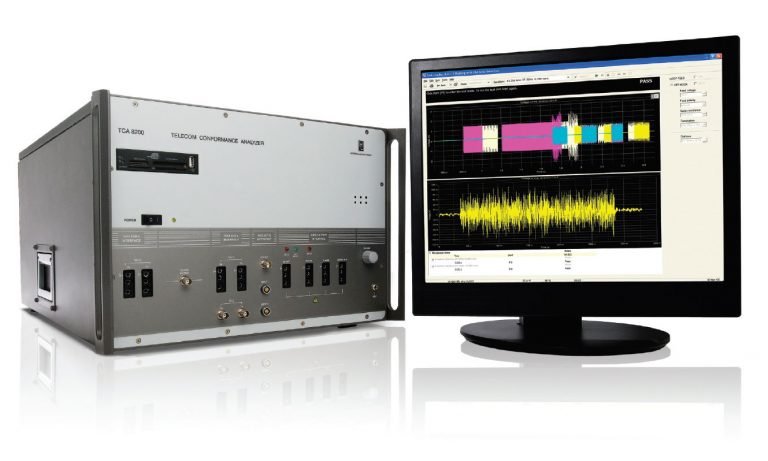
- Test equipment that assesses conformance devices per the requirements for device connection to the PSTN. HL TCA 8200 is an example.
- PSTN tester
- See PSTN testing
- PSTN testing
- Testing of equipment that connects to PSTN or of the PSTN. Includes analog FXS & FXO and T1/E1 testing
- Back to top
- Q
- R
- radio conformance testing
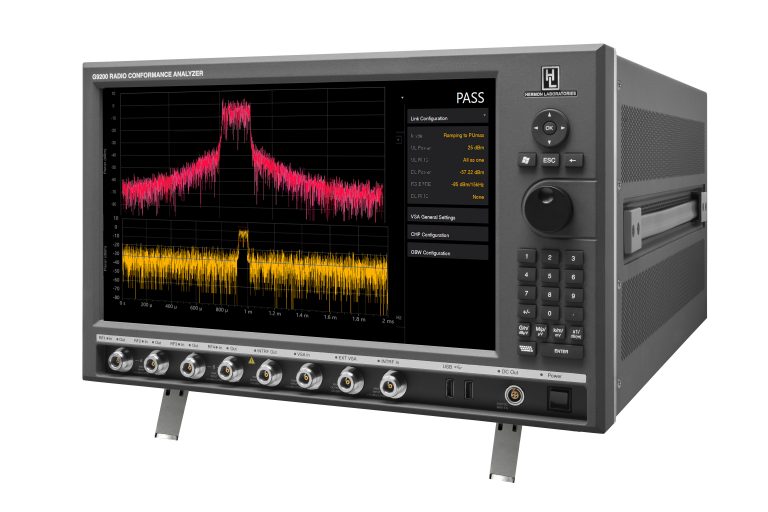
- Testing of Radio devices according to regulatory or otherwise accepted standards
- radio test equipment
- Equipment that tests radio devices including RF/Microwave, transmission characteristics, protocol and functional testing, voice quality testing
- regulatory standards
- Mandatory standards that are required under national law or by industry consortium.
- Back to top
- S
- SIP conformance testing
- Testing of SIP (Session Initiation Protocol) according to accepted standards e.g. ETSI TS 102 027
- SIP standard
- RFC 3261
- SIP standards
- ETSI TS 102 027, RFC 3261
- sms measurement
- see CID/SMS
- Back to top
- T
- t1 analyzer
- See E1..
- t1 measurement
- See E1..
- t1 measurements
- See E1..
- t1 standard
- See E1..
- t1 standards
- See E1..
- t1 test
- See E1..
- t1 test equipment
- See E1..
- t1 test set
- See E1..
- t1 tester
- See E1..
- t1 testing
- See E1..
- Back to top
- u
- V
- voice quality standards
- ITU-T P.862, P.862.1
- voice quality testing
- Testing of quality of voice in voice (communication) equipment and networks by using "conventional" test methods (SNR, THD, frequency, response, etc) and PESQ (Perceptual Evaluation of Speech Quality)
- VoIP testing
- Testing Voice over IP (Internet Protocol) equipment or networks including Voice Quality Testing, Quality of Service testing, Acoustic measurements of VoIP phones, VoIP protocols (SIP, H.323) testing, packet loss, delay, latency, jitter, VAD testing, echo measurements, load testing
- Back to top
- W
- W&G PCM4
- Wandel & Goltermann PCM-4
- W&G PCM-4
- Wandel & Goltermann PCM-4
- For long (until its production was stopped) Wandel & Goltermann PCM-4 PCM Channel Measuring Set has been and industry standard for VF, TIM and PCM testing of analog/digital (T1/E1) telephony (PCM) equipment such as PBXs, CO equipment, multiplexers, DSU/CSUs, etc. HL TCA 8200 Telecom Conformance Analyzer includes the W&G PCM-4 test capabilities and adds much more tests and functionality (such as built-in signaling, full range of layer 1 testing, protocol and functional testing.
- Back to top
- X
- xDSL standard
- See ADSL/ADSL test/ADSL stds…
- xDSL standards
- See ADSL/ADSL test/ADSL stds…
- xDSL test
- See ADSL/ADSL test/ADSL stds…
- xDSL test equipment
- See ADSL/ADSL test/ADSL stds…
- xDSL tester
- See ADSL/ADSL test/ADSL stds…
- xDSL testing
- See ADSL/ADSL test/ADSL stds…
- Back to top
- Y
- Z
|
|
|
| KEY STANDARDS |
TS 103 021, TBR 10, 21, 38 TBR 4, 12, 13 (Europe) FCC Part 68, TIA-968-A (USA) CS-03 (Canada) AS/ACIF S002/3/4/16 (Australia) ITU-T G.703, G.823, G.824, G.992.1/3/6, P.862 (PESQ) ETSI TS 102 027 (SIP) TIA-810A/B, 920-A ETSI ES 202 737-40 3GPP TS 26.131/2, TS 51.010-1 3GPP TS 51.010-1
|
And More And More
|
|